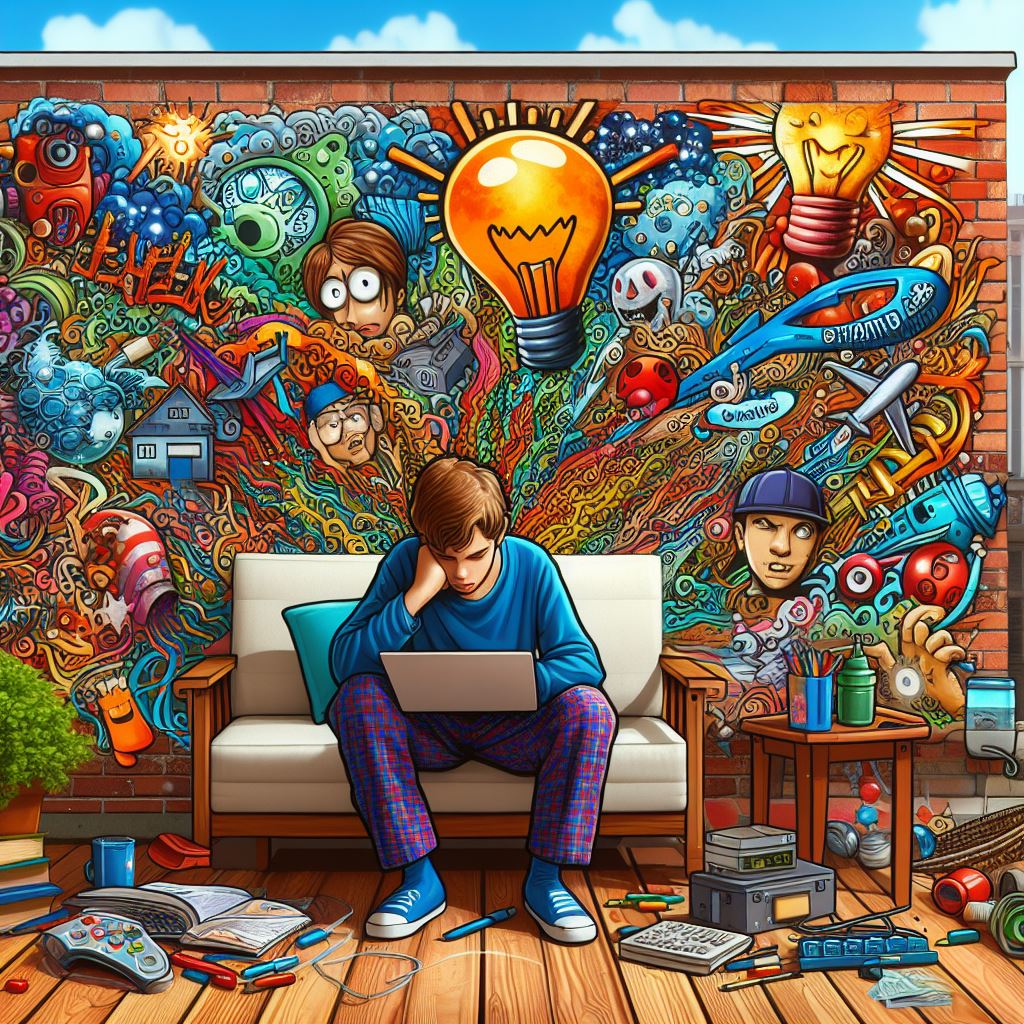
The pacing around the house, staring repeatedly into the pantry or fridge, sighing every few minutes, picking up random objects and fiddling with them… it can only mean one thing. The teenager is bored (and probably hungry but that goes without saying). I suspect this sort of scene is being played out in households all over Victoria right now as we find ourselves well into the long summer holiday break. You would think we would be more practiced at this after experiencing the restrictions of COVID-19 lockdowns but it is amazing how quickly we forget. Necessity, as the saying goes, is the mother of invention and there was nothing like weeks and months of restrictions to bring out some creative solutions from people. There were opera singers putting on performances from their balconies for the neighbours, chalk drawings, teddy bears and all manner of ‘care packages’ displayed on nature strips for the benefit of anyone out for their permitted exercise jaunt, and of course more communication technology solutions than you could poke a USB stick at! School holidays offer much more freedom than a pandemic lockdown but the bored teenager seems to still be a feature in both. Apparently there are two common mindsets when faced with these hiatus moments in life. One is to allow our creativity to flourish as we find new ways of doing things and connecting with people. The other is to languish in the mind-numbing tedium of trying to swipe and scroll boredom away. Research suggests that there are actually different types or levels of boredom and not all of them lead to positive outcomes. At one end of the scale we have Apathetic Boredom, described as having low arousal and a lack of positive or negative feelings – in other words, a feeling of helplessness or depression. I am sure you have felt this yourself or seen it in your child at times and you know how frustrating it can be. At the other end of the scale we have what is referred to as Reactant Boredom which is associated with high levels of arousal and negative emotions. This is the pacing and fidgety teen prowling the house with a dissatisfied look on their face. My experience is that this type of boredom inevitably ends either in a burst of creative activity or a defeated collapse on the bed.
We often talk about the idea that humans are made in the image of God and this concept has two significant ramifications for how we are being impacted by our current situation. Firstly, God is by nature a relational being which means that we, in turn, are relational creatures. We need connection with others. Even the most introverted amongst us still desires human interaction and when our interactions are limited for an extended period of time, we start to struggle. Secondly, God is by nature a creative being and we, in turn, are creative creatures. We are hard-wired to re-imagine and innovate, to look for alternative ways of doing things. Creativity is built into us to help us not just survive but to thrive. I have talked in other pieces about joy and gratitude as important tools to help us face challenges and just as we need to cultivate these attitudes, so too do we need to cultivate creativity in ourselves and our children. How screens feature in this equation is a whole other topic but, in brief, my view would be that a lot depends on how screens are being used and for how long. Screen time that involves creativity, design, problem-solving and social interaction probably has a place as a worthwhile activity. Screentime that involves pure consumption of material simply reinforces apathetic boredom and should be actively limited. Boredom is not something to be feared or even avoided. Boredom can be the thing that drives us to unleash the creative part of us that in turn reflects the wonder of a creative God. School holiday boredom could be the greatest gift your child recieves this summer! So next time your moody child paces restlessly through the house, do not try to rescue them from their boredom or tell them what they should do. Instead, watch and wait and just maybe you will see that wonderful transition as a creative thought takes hold and they suddenly come alive with energy.
May you know the joy of letting your creativity transform boredom into a time of new discovery for you and your children.
If you made it to the end of this article, perhaps you would like to contribute your thoughts in the comments section. What does boredom look like in your house? Are screens an enemy or ally in overcoming boredom?


 The Lowe-Down
Leave a comment